
Computer science is the science, technology, and application of the automated processing and transmission of information. It deals with the theory, methodology, analysis, and design of information technology systems—as well as their practical application and social impact.
Computer science is far more than a standalone discipline: its ways of thinking and tools have found their way into nearly all areas of science, business, technology, and even the humanities. Many of today’s fields of research and technologies would be inconceivable without computer science concepts and methods.
The Computer Science elective provides students with the key foundations for making informed decisions in an IT context in an increasingly digitalized working world. The aim is to enable students to actively participate in the planning, selection and implementation of software solutions, databases and information systems - for example, in the design of IT processes or collaboration in interdisciplinary project teams.
Even though graduates typically do not work as computer scientists themselves, the ability to communicate effectively with IT professionals is essential. This requires a basic understanding of the ways of thinking, methods, techniques and technical terms of computer science.
The focus is not only on technical knowledge but, above all, on understanding how computer science thinks and works. Students become familiar with key concepts, methods, and approaches - and develop a sense of what digital systems are capable of and where their limitations lie. This basic understanding is crucial for competently evaluating digital solutions, clearly communicating requirements, and collaborating across disciplines.

This module provides an introduction to basic concepts of computer science with a particular focus on the structure and functioning of the internet. Topics covered include the digital representation of data, computer architectures, networks, protocols, services and IT security. In addition, topics such as searching for information, data processing and computer applications in the humanities and social sciences - such as the use and analysis of social media - are at the centre of attention.
The module is explicitly aimed at students with no prior knowledge of computer science and provides a practical foundation for the competent use of digital technologies - particularly, but not exclusively, in the context of the humanities and social sciences.
This module provides an introduction to basic concepts of computer science with a particular focus on the structure and functioning of the internet. Topics covered include the digital representation of data, computer architectures, networks, protocols, services and IT security. In addition, topics such as searching for information, data processing and computer applications in the humanities and social sciences - such as the use and analysis of social media - are at the centre of attention.
The module is explicitly aimed at students with no prior knowledge of computer science and provides a practical foundation for the competent use of digital technologies - particularly, but not exclusively, in the context of the humanities and social sciences.

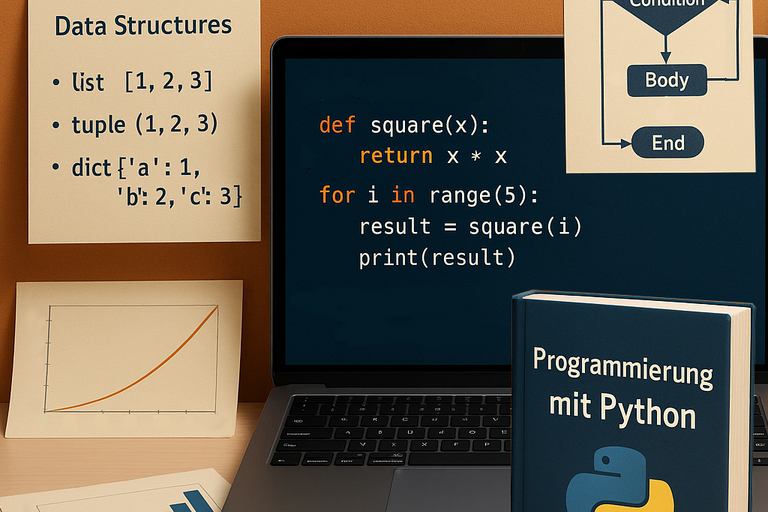
The ‘Programming with Python’ module teaches basic programming skills using the widely used programming language Python. The focus is on a systematic introduction to central programming concepts such as data structures (e.g. lists, tuples, dictionaries), control structures, functions and the basics of object-oriented programming.
A particular focus is on the development of methodological skills, such as structured problem solving (top-down design), writing, testing and debugging simple programmes and independent further training with the help of technical documentation. The module thus lays a solid foundation for the competent use of Python.
The ‘Programming with Python’ module teaches basic programming skills using the widely used programming language Python. The focus is on a systematic introduction to central programming concepts such as data structures (e.g. lists, tuples, dictionaries), control structures, functions and the basics of object-oriented programming.
A particular focus is on the development of methodological skills, such as structured problem solving (top-down design), writing, testing and debugging simple programmes and independent further training with the help of technical documentation. The module thus lays a solid foundation for the competent use of Python.