How can energy supply remain stable even in times of crisis? A team from the University of Passau, led by Professor Hermann de Meer, is developing a low Earth orbit (LEO) satellite-based communication architecture in the joint research project “KRISNet” that will make energy networks reliable even under extreme conditions.
A reliable energy supply is essential for our everyday lives. However, systems are becoming increasingly complex due to the rapidly growing share of fluctuating renewable energies, increasingly decentralised generation plants and greater integration of different sectors. At the same time, the risks are increasing: extreme weather, targeted (cyber) attacks or technical malfunctions can disrupt the supply. The situation becomes particularly critical when communication systems also fail, because without them, energy networks cannot be controlled stably or restarted quickly and safely after disturbances.
This is precisely where the KRISNet joint research project comes in. The aim is to develop a resilient infrastructure that enables reliable communication for digitised power grids and other critical infrastructures at all times. To this end, KRISNet is pursuing the establishment of its own sovereign satellite network in low Earth orbit, which will initially be tested by a demonstration satellite. The planned satellite network in low Earth orbit (LEO) will be operated under German or European control and will specifically strengthen the communications infrastructure to keep it functional even in crisis and emergency situations. Among other things, KRISNet is researching how communication networks such as fibre optics and mobile communications on Earth can be closely connected to LEO satellites and how it is possible to switch between available networks in emergencies in order to prevent data transmission losses and thus maintain communication between energy facilities at all times, even in crisis situations. The results are tested together with the electricity grid operators of the distribution and transmission grids in realistic load and fault scenarios using tests and demonstration facilities to ensure the practical suitability of the transmission system. In addition, the project is investigating communication and data fusion technologies in space, where data is already processed directly on satellites.
In the project, Professor Hermann de Meer's team in Passau is developing the methodological and technological basis for a resilient and adaptable communication solution. To this end, various crisis and fault situations are being systematically investigated and transferred into a comprehensive architectural concept that can also be applied to other critical infrastructures. The central element is a software-based communication architecture that dynamically controls data paths, prioritises important information in a targeted manner and ensures reliable and loss-free transmission through the parallel use of multiple channels. In addition, sensor data from various sources is collated and evaluated directly on the satellite in space to enable value-added services for better condition monitoring, early fault detection and more efficient control of supply networks.
KRISNet has a total project volume of €8 million and is funded by the Federal Ministry of Research, Technology and Space (BMFTR) with €5.9 million as part of the German government's security research programme (SIFO). The interdisciplinary project consortium comprises ten proven partners to cover all the important tasks involved: Siemens AG (energy transmission and distribution networks) as consortium leader, the University of Passau (energy informatics), esc Aerospace GmbH (secure communication), Infineon Technologies AG (hardware security anchors), Giesecke+Devrient Mobile Security Germany GmbH (security technology), Zentrum für Telematik Würzburg (small satellites), Technische Hochschule Würzburg-Schweinfurt (smart grids), as well as associated industry partners such as Amprion GmbH (energy transmission network operator), ÜZ Mainfranken eG (regional energy supplier), Nokia Solutions and Networks (communication networks). KRISNet is creating a groundbreaking foundation for a crisis-proof, sovereign and sustainable energy system in Germany and Europe.
This text was machine-translated from German.
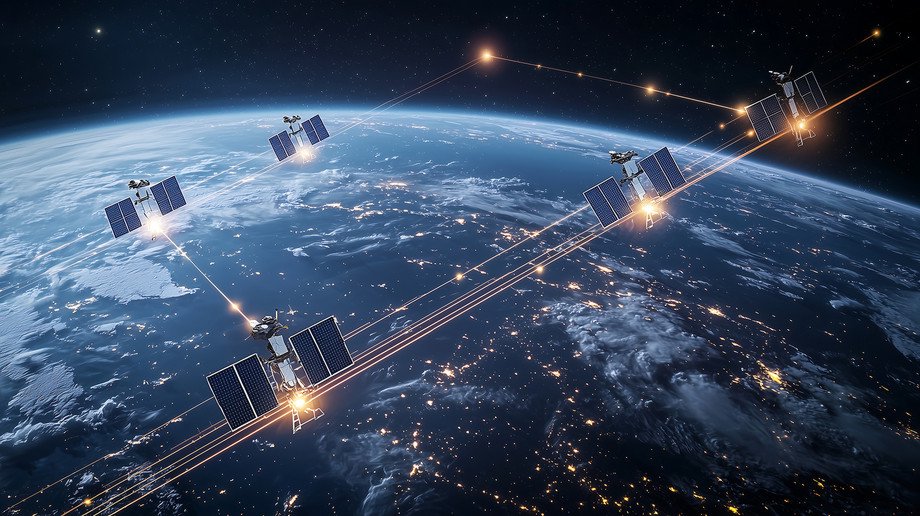
Symbolic image: Adobe Stock
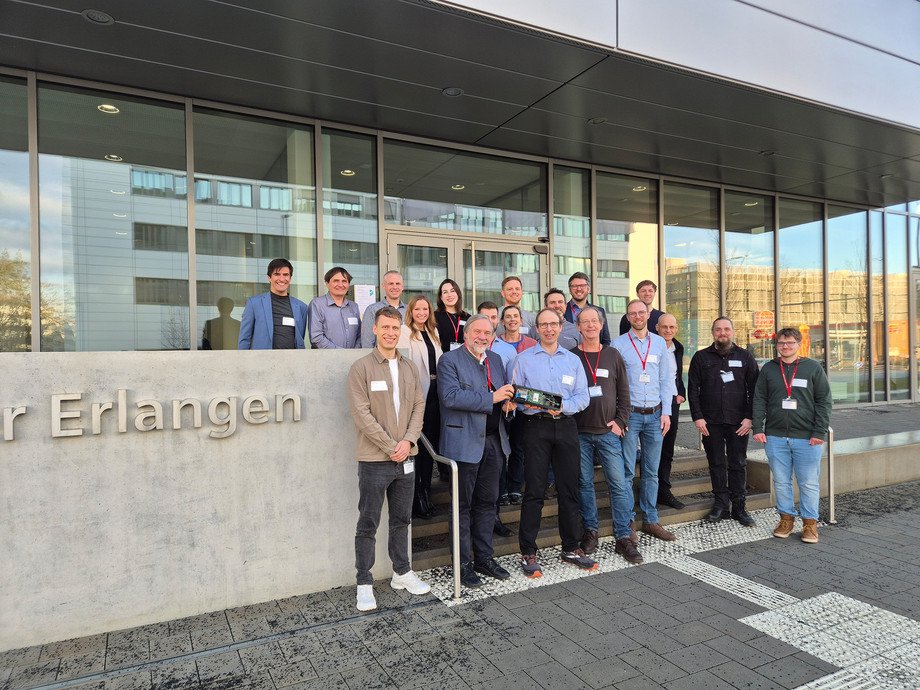
Image of the project team:
| Principal Investigator(s) at the University | Prof. Dr. Hermann de Meer (Lehrstuhl für Informatik mit Schwerpunkt Rechnernetze und Rechnerkommunikation) |
|---|---|
| Project period | 01.01.2026 - 31.12.2028 |
| Source of funding |
BMFTR - Bundesministerium für Forschung, Technologie und Raumfahrt
|
| Themenfelder | Informatik, Informatik allgemein, Angewandte Informatik, Elektrotechnik, Informatik und Systemtechnik |
| Förderhinweis |
Funded as part of the announcement ”Cross-sector measures for resilient supply“ by the Federal Ministry of Research, Technology, and Space within the framework of the German government's ”Research for Civil Security“ program under grant number 13N17631. |